
Honoring the Muslim saint Hazrat Haji Ali this mosque
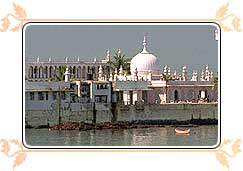 was built in the middle of the sea with only a narrow path leading to it
giving it an ethereal look. As per the Muslim traditions separate praying
rooms for ladies and gents are provided here to pay their respects. It is
set 500 yards into the sea and can be reached only in low tide. The Haji Ali
masjid has an offshore location, opposite the Mahalakshmi racecourse.
During high tide, the connecting causeway is submerged in water giving the
impression that the mosque and Haji Ali tomb are floating out at sea in splendid
isolation. This is The Haji Ali Dargah, the floating tomb of a wealthy
Mohammedan merchant who renounced his worldly ways before embarking on a
pilgrimage to Mecca.
was built in the middle of the sea with only a narrow path leading to it
giving it an ethereal look. As per the Muslim traditions separate praying
rooms for ladies and gents are provided here to pay their respects. It is
set 500 yards into the sea and can be reached only in low tide. The Haji Ali
masjid has an offshore location, opposite the Mahalakshmi racecourse.
During high tide, the connecting causeway is submerged in water giving the
impression that the mosque and Haji Ali tomb are floating out at sea in splendid
isolation. This is The Haji Ali Dargah, the floating tomb of a wealthy
Mohammedan merchant who renounced his worldly ways before embarking on a
pilgrimage to Mecca. The structure is a slim solitary minaret. It is linked to the mainland by a tenuous causeway, which is practically nonnegotiable during rough monsoon, tides. Behind the sculpted entrance, a marble courtyard contains the central shrine. Hundreds of worshippers stoop to press their forehead against the richly brocaded red and green chaddar covering the tomb, lying in an exquisite silver frame supported by marble pillars and is decorated with artful mirror work: blue, green, yellow chips of glass arranged in kaleidoscopic patterns interspersed with Arabic patterns which spell the ninety-nine names of Allah.
History of Haji Ali Dargah
The legend goes that Haji Ali died on a pilgrimage to Mecca and miraculously his casket floated back to these shores. The mosque is picturesque with a vast courtyard and refreshment stalls. It contains the tomb of the Muslim saint Haji Ali. The saint is believed to have been a wealthy local businessman who renounced the material world and meditated on a nearby headland following a pilgrimage to Mecca. His devotees built the mosque and the tomb in the early 19th century. Alternate version says that Haji Ali died while on his pilgrimage to Mecca and his casket surprisingly floated back to Mumbai (then Bombay).
Attractions of the Haji Ali Mosque
The mosque can be reached only during low tide. The whitewashed mosque also has a cool courtyard generally full of people and refreshment stalls. The rocks exposed during low tide at the rare end of the mosque are a favourable spot to catch some cool sea breeze. There's nothing somber about the building's cool courtyard, which is generally full of chattering families and refreshment stalls.
So seek the blessings of Hazrat Ali while coming on the Haji ali darshan. And one more thing like other mosques in India here too taking the haji ali photo or Haji Ali images is not allowed.