
| Location : | Patna |
| Famous For : | The Birthplace Of Guru Govind Sahib |
| Built In : | 1839 |
| Houses : | Takht Sri Harmandir Sahib |
Where is Patna Sahib :
The Sikhs consider the city of Patna as particularly holy, as the tenth guru of the Sikhs was born here. It was here that Guru Gobind Singh was born in the year 1666 and spent his early years before moving to Anandpur. Besides being the birthplace of Guru Gobind Singh, Patna was also honoured by visits from Guru Nanak as well as Guru Tegh Bahadur.
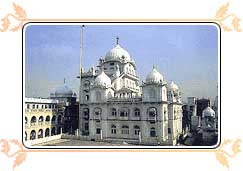 Takht Patna Sahib :
The Harmandir Takht, the gurudwara that commemorates Guru Gobind Singh, is a sacred place of pilgrimage for the Sikhs. To the Sikhs this holy place is reverentially known as Patna Sahib. Regarded as one of the holiest of the five takhts, it is situated in one of the old quarters of Patna City. The place once known as Kucha Farrukh Khan is now known as Harmandir Gali. Two of the five Takhts are located outside Punjab and are Takht Sri Harmandir Sahib, Patna in Bihar, and Takhat Patna Sahib Sri Hazoor Sahib at Nanded in Maharashtra. Three Takhts are in Punjab. These are Akal Takht Amritsar, Keshgarh Sahib Anandpur and Sri Damdama Sahib at Talwandi Sabo Bhatinda district.
Salis Rai Johri, a great devotee of Guru Nanak was so much influenced by his teachings that he converted his opulent haveli into a dharamshala where Guru Tegh Bahadur also stayed. This is the place where the holy shrine of Harmandir Sahab is now located. The work of reconstructing the Harmandir in 1839 following destruction by fire was started by Maharaja Ranjit Singh started who did not survive to see the new structure. In 1934, when an earthquake rocked the entire Bihar some portion of Harmandir fell down. Construction of the present building was taken up on November 19, 1954 and was completed in about three years.
Patna Sahib Gurudwara
Quite a few relics of the Guru Govind Sahab are also preserved in this shrine that include a 'pangura' (cradle) with four stands covered with golden plates, four iron arrows, sacred sword of the Master and a pair of his sandals. 'Hukamnamas', the written orders of Guru Gobind Singh and Guru Tegh Bahadur contained in a book are also kept in this holy Gurudwara.
The holy place of the Sikhs has grown up at Jhauganj (Chowk) of Old Patna around the birthplace, of the 10th or the last Guru of the Sikhs Guru Govind Singh. Among the holiest five Takhats Sri Harmandirji is the second.
Its architecture is also beautiful. But when the ancient Harmandir had burnt down by fire, Maharaja Ranjit Singh had built the present one in white marble in 1839. Even that was destroyed by the earthquake of 1934. The new Harmandir was re-built in 1954.
A museum with Sikh dynasty in painting, footwear of Guru, swing and many other articles can be seen at the ground floor. Birthday of the Guru is celebrated with pomp. Entry with head covered and bare feet is compulsory. Arrangement is available at the gate. Shops on the lane sell bamboo and leather articles.