
| Location: | Uttar Pradesh |
| Attractions: | Kumbh Mela, Sangam Bath, Ardh Kumbh |
| Languages: | Hindi, English |
| Related Links: | Kumbh Mela, Ganges River, Yamuna River |
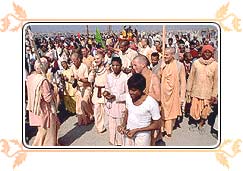 The
most sacred spot in Allahabad is Triveni Sangam, the confluence of three of
the holiest rivers of the Hindu mythology, the holy Ganga, Yamuna and the
mythical Saraswati. Devout Hindus from all over India come to this sacred
pilgrimage point to offer prayers and take a dip in the holy waters. It is
believed that a holy dip taken at the Sangam washes away all sins.
The
most sacred spot in Allahabad is Triveni Sangam, the confluence of three of
the holiest rivers of the Hindu mythology, the holy Ganga, Yamuna and the
mythical Saraswati. Devout Hindus from all over India come to this sacred
pilgrimage point to offer prayers and take a dip in the holy waters. It is
believed that a holy dip taken at the Sangam washes away all sins. The Prakrista Yajna was performed here by Lord Brahma. That is how it received its ancient name, Prayag. Allahabad is also called Tirtha-Raja, king of all holy places. It is said that Lord Rama visited Allahabad when He was in exile.
Location
Allahabad is one of the oldest cities in India. It is located 135 km west of Varanasi, at the confluence of India's two most important rivers-the Yamuna and Ganges. It is 585 km southeast of Delhi and 160 km south of Ayodhya. The main spiritual reason for coming here is to take bath in the Sangam, to confluence (where rivers meet), of the Yamuna, Ganges, and the underground Saraswati Rivers. It is one of the major pilgrimage sites in all of India.
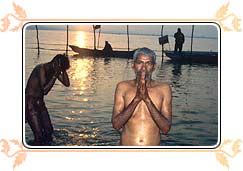 This
is where the Ganges, Yamuna and Saraswati meet. This place is
considered to be the most important holy bathing place in India. The
muddy-colored Ganges in shallower and more rapid. The Yamuna is
bluer and deeper. The most auspicious time to bathe in the Sangam is
during Kumbha -mela. It is also especially auspicious to bathe here
during the month Magh (January-February).
This
is where the Ganges, Yamuna and Saraswati meet. This place is
considered to be the most important holy bathing place in India. The
muddy-colored Ganges in shallower and more rapid. The Yamuna is
bluer and deeper. The most auspicious time to bathe in the Sangam is
during Kumbha -mela. It is also especially auspicious to bathe here
during the month Magh (January-February).